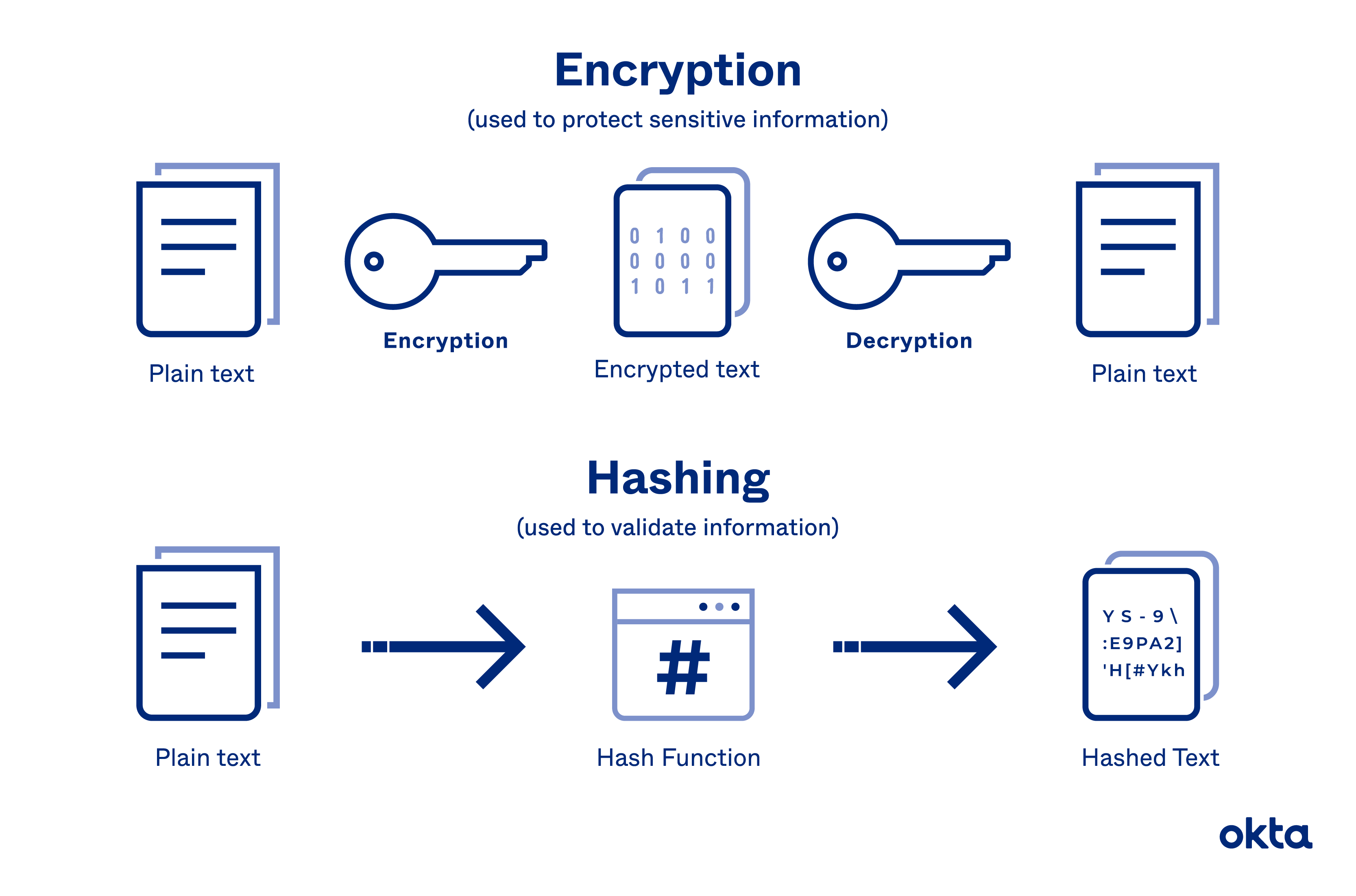
Image Describing KDD-255 the Novel Key Based Hashing Algorithm

Proposing a Novel Key Based Hashing Algorithm

Published At: IEEE TENSYMP Region 10 2023

The existing key-based hashing algorithms, such as HMAC, NMAC and GMAC are highly dependent on pre-existing hashing algorithms such as MD5 and SHA1 which are self-sufficient and independent from the usage of keys. Hence, as a result, the key-based hashing algorithms inherit many aspects of security from its underlying algorithm and usually enhance it. But this feature also accounts for the loopholes in key-based hashing algorithms. The key-based hashing algorithms also inherit the number of rounds, used to hash the message, from its underlying algorithm as well. A fixed number of rounds also allows attacks on particular rounds in the algorithm to crack it. In this paper, a new, independent hashing algorithm is introduced which does not have a fixed number of rounds and is based on basic mathematical and Boolean concepts of Bitwise Operators. The performance and security analysis have shown in results, that the proposed algorithm is resistant towards known attacks on hashing algorithms and a few other attacks proposed by other researchers. Its performance analysis shows that it works in O(k3/2) time complexity which is efficient than O(k2) Time Complexity used in many widely used Key-Based Hashing Algorithms.

Phishing Attack Methodology Description Diagram

Detecting Phishing Attempts in Blockchain Technology Using Machine Learning: A Comparitive Study

Published At: MDPI Algorithms 2023

Security in the blockchain has become a topic of concern because of the recent developments in the field. One of the most common cyberattacks is the so-called phishing attack, wherein the attacker tricks the miner into adding a malicious block to the chain under genuine conditions to avoid detection and potentially destroy the entire blockchain. The current attempts at detection include the consensus protocol; however, it fails when a genuine miner tries to add a new block to the blockchain. Zero-trust policies have started making the rounds in the field as they ensure the complete detection of phishing attempts; however, they are still in the process of deployment, which may take a significant amount of time. A more accurate measure of phishing detection involves machine-learning models that use specific features to automate the entire process of classifying an attempt as either a phishing attempt or a safe attempt. This paper highlights several models that may give safe results and help eradicate blockchain phishing attempts.

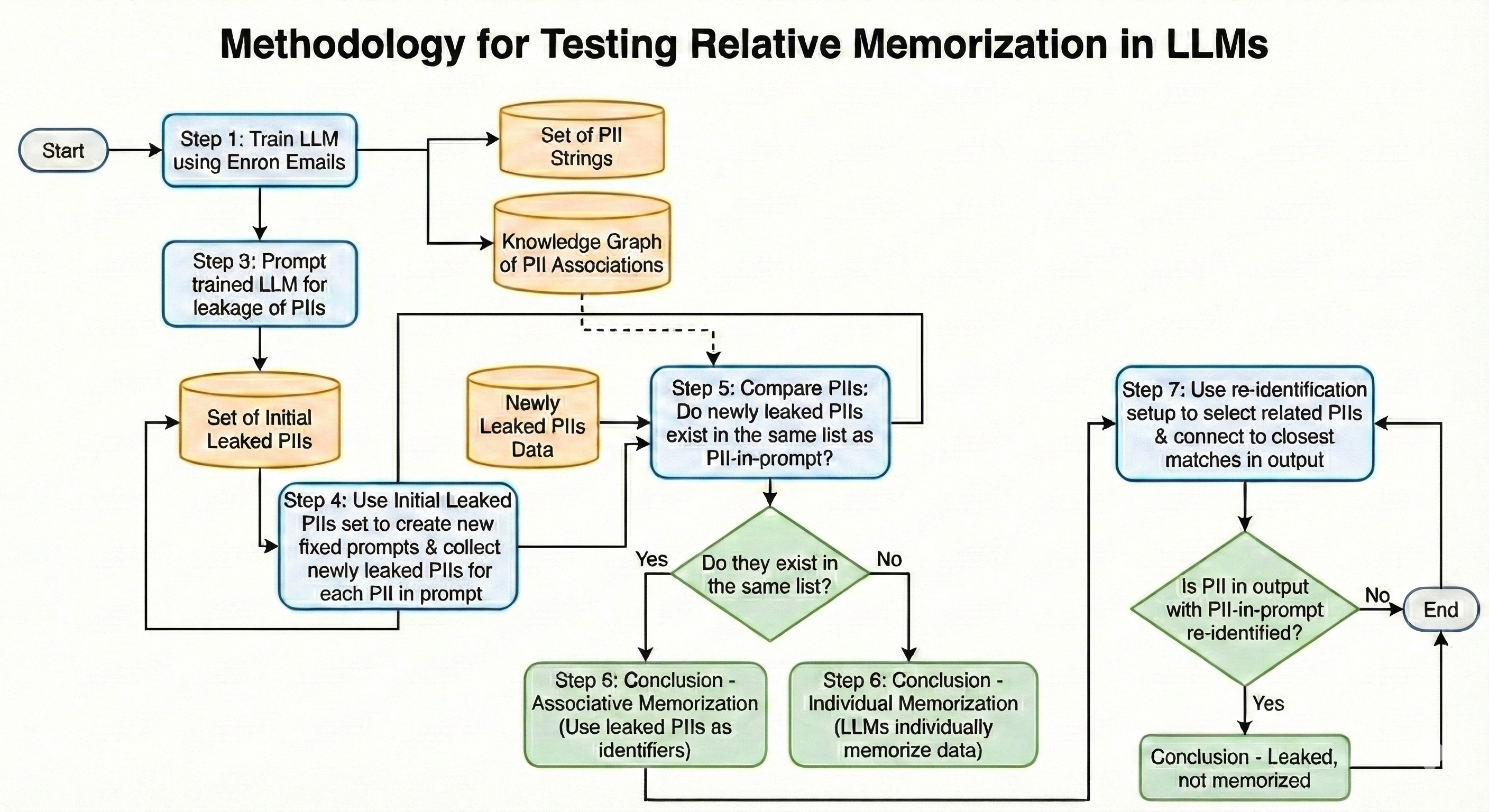
Diagram introducing flow of RMFT as Built

Randomized Masked Finetuning - An Efficient Mitigation Technique to Memorization in LLMs

Targeted At: ICML 2026

The current literature on memorization in Natural Language Models, especially Large Language Models (LLMs), poses severe security and privacy risks, as models tend to memorize personally identifying information (PIIs) from training data. We introduce Randomized Masked Fine-Tuning (RMFT), a novel privacy-preserving fine-tuning technique that reduces PII memorization while minimizing performance impact. Using the Enron Email Dataset, we demonstrate that RMFT achieves an 80.81% reduction in Total Extraction Rate and 80.17% reduction in Seen Extraction Rate compared to baseline fine-tuning, outperforming deduplication methods while maintaining only a 5.73% increase in perplexity. We present MaxTER, a Pareto-optimal evaluation framework for assessing privacy-utility tradeoffs, and show the performance of RMFT vs Deduplication by Area Under The Response Curve (AURC) metric.